


The North as Axpe's strategic axis: Asturias and Galicia
Two hubs, a single logic
Axpe has spent years building a presence in northern Spain with a clear criterion: we don’t open offices just to plant a flag, but to generate real capacity close to where the projects and the people are. Asturias and Galicia are the clearest expressions of this strategy.
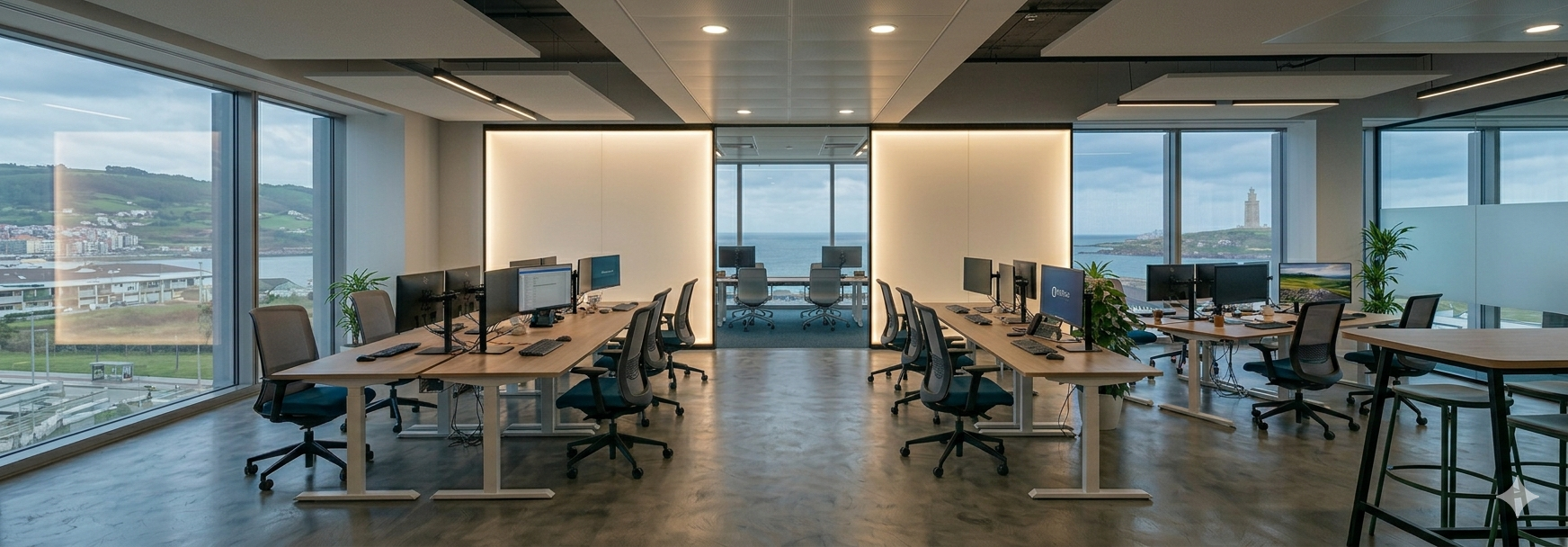
At the Asturias Technology Park (PTA) and in A Coruña, we operate today with local teams, ongoing projects, and concrete growth targets. These are not symbolic headquarters; they are productive centers with genuine autonomy.
Asturias: from 15 to 100 professionals
From our office in the PTA, we currently work with a team of 15 specialized professionals. The goal is to reach 100 professionals by 2026. This figure is not born from an optimistic roadmap, but from a growing project portfolio and the decision to build an operational center of excellence here for managed services in Public Administration.
Asturias possesses technical talent that shouldn’t have to relocate to work on high-demand projects. Axpe is here to be that option: high-skilled, stable employment with a career path, integrated into the innovation ecosystem articulated by the PTA.
Galicia: consolidation with muscle
In A Coruña, we already have 50 professionals, and the goal is to reach 100 before the end of 2026. This growth reflects what Galicia represents for Axpe: a mature market with consolidated clients and major projects in three strategic sectors: Public Administration, Finance, and Retail.
The Galician headquarters does not operate as an extension of the central structure. It is a productive center with its own capacity to manage complex projects and respond to the specific needs of each sector. Its integration into the regional innovation ecosystem reinforces this capability and anchors Axpe within Galicia’s business and institutional fabric.
The model behind It
Asturias and Galicia are not isolated cases. They are the application of a regional center model that Axpe has been consistently building: local presence, stable teams, local knowledge, and a commitment to high-skilled employment in every area where we operate.
In Axpe’s strategy, the north of Spain is not the periphery. It is one of its primary axes of growth.